If you have ever looked at your backyard, garage, or side yard and wondered whether it could do more for you, you are not alone. In Pasadena, accessory dwelling units, or ADUs, have become a real point of interest for homeowners who want more flexibility from their property. Whether you are thinking about future living space, a separate work area, or long-term resale appeal, understanding the local rules can help you make smarter decisions. Let’s dive in.
Pasadena ADU basics
In Pasadena, an ADU is a secondary dwelling unit on the same parcel as a primary home. The city allows ADUs in residential zones with one single-family dwelling, and some configurations are also allowed on lots with existing multifamily buildings, according to the City of Pasadena ADU overview.
One reason ADUs have gained momentum is that approval is generally ministerial rather than discretionary. That means if your project meets the objective rules, it is reviewed against those standards instead of going through a more subjective approval process. Pasadena also notes that completed ADU applications must be acted on within 60 days, which gives homeowners a clearer timeline to plan around.
The city updated its ADU and JADU regulations in 2024, so it is important to work from the current standards rather than older assumptions. For many homeowners, that alone makes early research worthwhile.
Why ADU potential matters
ADU potential is not just about adding a rental unit. For many homeowners and buyers, it represents flexibility over time.
A property that may support an ADU can offer room to adapt as your needs change. That could mean space for extended family, a separate home office, or a future legal second unit if the lot and permitting path support it. In a market like Pasadena, that kind of optionality can matter.
Buyer interest appears to be moving in that direction. A 2025 Zillow consumer housing trends survey found that 55% of prospective buyers said an existing ADU would make them more likely to buy, up from 46% in 2024. The same survey found that 54% would be more likely to buy a property where local laws allow an ADU, and 30% said a separate structure for a home office was very or extremely important.
For Pasadena homeowners, that suggests ADU potential can shape how buyers think about a property’s usefulness, not only its current layout. Even if you are not building right away, the possibility itself can be meaningful.
Pasadena process and support
Pasadena has taken steps to make the ADU process easier to start. The city offers online ADU e-permitting and free virtual consultations before plan check, which can help you understand your site before you move too far into design.
That matters because the earliest stage is often where homeowners save time and avoid frustration. A quick consultation can help you confirm whether your lot appears straightforward or whether there may be issues that need extra review.
The city also announced reduced ADU fees in 2025 for single-family properties. Depending on the structure of the project, Pasadena describes discounted plan-check fees, reduced or waived permit fees, and a reduced refundable construction and demolition deposit. The city also notes that these fee reductions do not apply to multifamily sites.
Another program to know is Pasadena’s Second Unit ADU Program. For qualifying homeowners, the city says the program can provide up to $225,000 in construction financing at 1% simple interest, no payments for three years, and project-management support for a new ADU intended for affordable rental use.
What makes a Pasadena lot easier
Some properties are simply better starting points for an ADU project. In Pasadena, the easiest opportunities are often lots that can meet the city’s objective standards without unusual site challenges.
According to Pasadena’s ADU Standard Plans Program page, slope or hillside conditions and expansive-soil sites can be problematic. The city also requires 4-foot side and rear setbacks, with added separation and lot-coverage rules for larger units.
In plain terms, flatter sites with cleaner access and enough room to satisfy setbacks are often more straightforward. That does not guarantee an easy approval, but it can reduce design complications.
Garage conversions can be especially practical
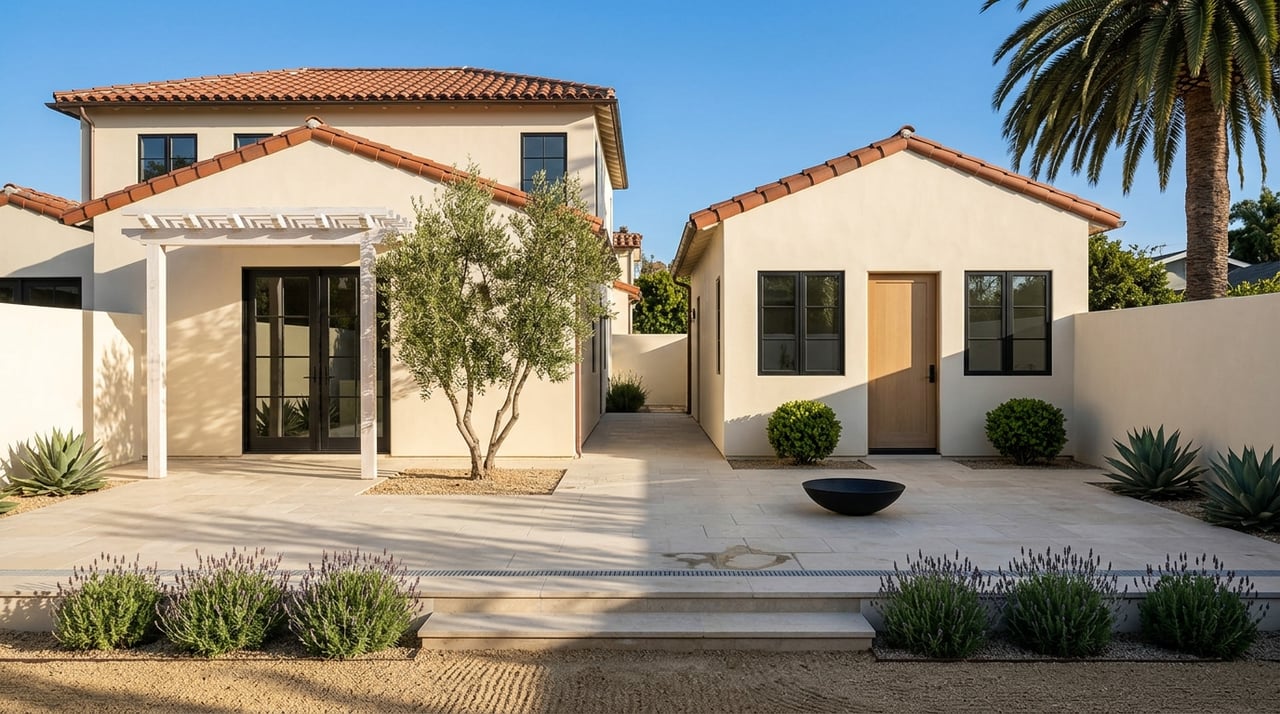
For many Pasadena homeowners, an existing garage or accessory structure may be one of the most practical ways to explore ADU potential. Under the state’s ADU handbook, ADUs created within existing living areas or accessory structures generally do not require setbacks.
That same state guidance also says replacement parking is not required when an existing garage, carport, or surface parking area is demolished or converted for the ADU. For a lot where new construction feels tight, that can be a major advantage.
This is one reason buyers and sellers often pay close attention to detached garages in Pasadena. In the right setup, they can create a more realistic path to future ADU use.
Transit access can help with parking rules
Parking is another area where site context matters. Pasadena states that parking is not required when an ADU is within a half-mile walking distance of a public transit stop, when the ADU is contained within existing space, or in historic districts, according to the city’s ADU regulations page.
The city also notes that a second driveway is generally allowed only from an alley. So if your lot already has good access or sits near transit, that may simplify part of the planning conversation.
Historic context is not a deal-breaker
If your property is in a historic district, that does not automatically rule out an ADU. Pasadena’s ADU table shows that detached ADUs in historic contexts must meet visibility limits tied to the public right-of-way.
That means design and placement may matter more, especially when visibility from the street is part of the review. It is not a stop sign, but it is a factor worth understanding early.
What to review before you buy or build
If you are thinking about buying a home with ADU potential, or evaluating whether your current home may support one, it helps to focus on a few practical questions first.
Key questions to ask
- Is the property in a residential zone where ADUs are permitted?
- Is there an existing garage or accessory structure that may be converted?
- Does the lot appear relatively flat, or does it have hillside or soil challenges?
- Is there enough room to meet Pasadena’s setback and separation rules?
- Is the property within a half-mile walking distance of public transit?
- Is the home in a historic district where visibility rules may affect placement?
- Is the property single-family or multifamily, and do city fee reductions apply?
These questions will not replace professional review, but they can help you quickly sort a promising property from one that may be more complex.
What this means for sellers
If you are preparing to sell in Pasadena, ADU potential can be part of your property story when the facts support it. The strongest message is usually not a promise of guaranteed buildability. It is a clear, accurate explanation that your property may offer future flexibility based on lot characteristics, existing structures, and Pasadena’s current rules.
That approach builds trust and helps buyers understand the opportunity without overselling it. In many cases, features like a detached garage, alley access, transit proximity, or a flatter lot can make a home more interesting to buyers who are already thinking ahead.
For sellers, that is where thoughtful positioning matters. A property does not need a completed ADU to benefit from the conversation. Sometimes the value is in showing buyers what may be possible next.
A smart next step for Pasadena homeowners
ADU potential in Pasadena is real, but it is never one-size-fits-all. The best opportunities usually come from matching your lot, existing improvements, and long-term goals with the city’s current rules and support programs.
If you own a home in Pasadena, or you are shopping with future flexibility in mind, an early property-level review can help you see the difference between a simple idea and a realistic path forward. If you want guidance on how ADU potential may influence your home’s marketability or your next purchase, connect with Andy Hairabedian for informed, local advice.
FAQs
What is an ADU in Pasadena?
- An ADU in Pasadena is a secondary dwelling unit on the same parcel as a primary residence, and the city allows ADUs in residential zones with one single-family home, with some options also available on lots with existing multifamily dwellings.
How long does Pasadena take to review an ADU application?
- Pasadena states that completed ADU applications must be acted on within 60 days.
Are garage conversions allowed for Pasadena ADUs?
- Yes, garage conversions and other existing accessory-structure conversions can be practical because state guidance says these ADUs generally do not require setbacks, and replacement parking is not required when a garage or similar space is converted or demolished for the ADU.
Does Pasadena require parking for every ADU?
- No, Pasadena says parking is not required in certain cases, including when the ADU is within a half-mile walking distance of a public transit stop, when it is contained within existing space, or when the property is in a historic district.
Are there Pasadena fee reductions or financing programs for ADUs?
- Yes, Pasadena announced reduced ADU fees in 2025 for eligible single-family properties, and the city’s Second Unit ADU Program offers qualifying homeowners up to $225,000 in 1% simple-interest construction financing with no payments for three years for affordable rental-use ADUs.
Can a historic district property in Pasadena still have ADU potential?
- Yes, a historic district does not automatically prevent an ADU, but Pasadena says detached ADUs in historic contexts must meet visibility limits tied to the public right-of-way.