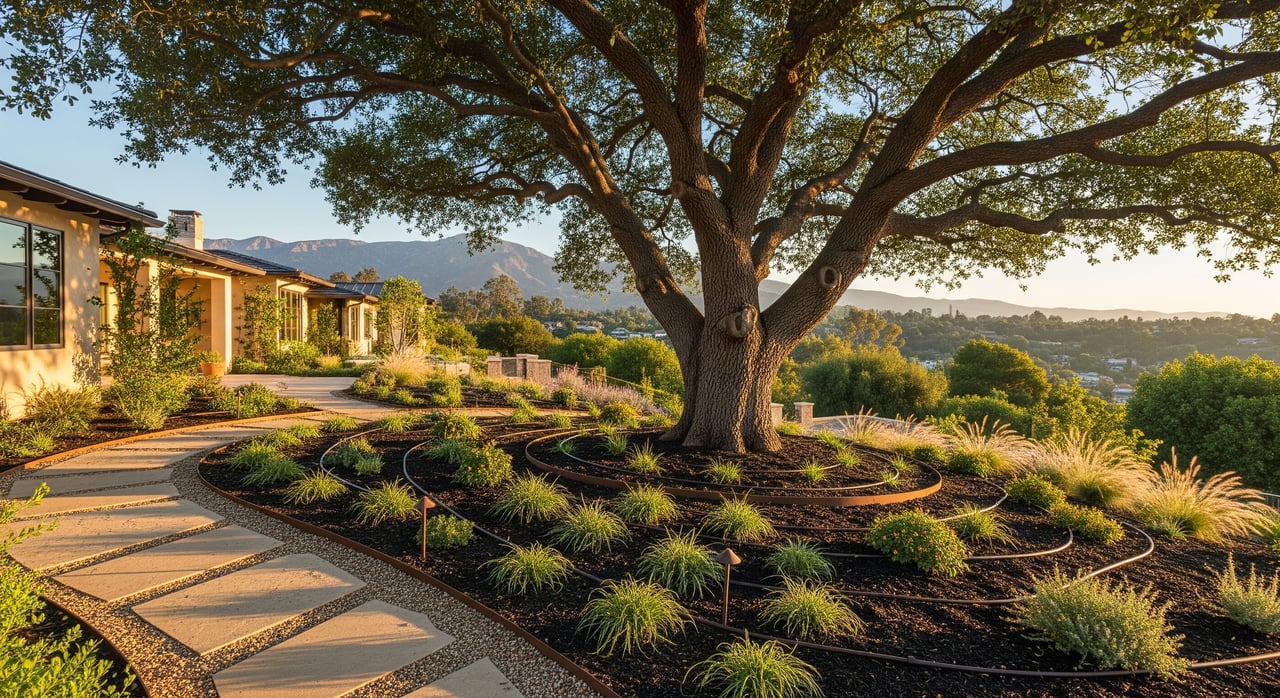
Do you want a lush, lasting landscape without risking fines or surprise delays? In La Cañada Flintridge, tree preservation rules shape what you can prune, plant, or build. If you plan carefully, you can protect your trees, meet water and fire requirements, and still get the look you want. This guide shows you what the city protects, when permits apply, and how to design smart around protected trees. Let’s dive in.
Know which trees are protected
R-1 vs. other zones
On R-1 single-family lots, protected trees include specified native oaks and California sycamore with a trunk diameter of 12 inches or more, measured at 54 inches above natural grade. Deodar cedar inside the Historic Deodar District has a special rule. In non-R-1 zones, nearly any tree taller than 5 feet is treated as protected. See the official definitions in Chapter 11.40 of the municipal code for exact species and thresholds (LCF Chapter 11.40).
How size is measured
Diameter is measured 54 inches above natural grade. If a tree has multiple trunks below that height, the diameters are added based on the code’s method. These measurements determine permit needs and replacement counts (LCF Chapter 11.40).
When you need a permit
Removal permits and approval criteria
You need a tree removal permit to remove any protected tree unless a listed exception applies. The director of Community Development decides based on findings, such as no practical design alternative, unreasonable hardship, dead or hazardous condition, or a written public safety requirement from the fire department. If removal is approved, the city may require replacement trees or an in-lieu fee per the city’s Tree Replacement Chart (LCF Chapter 11.40).
Trimming rules and who can prune
On R-1 properties, pruning may be done by the owner, a certified arborist, or a commercial tree service on the city’s approved list. Non-R-1 properties must use a certified arborist or an approved commercial service. Improper trimming that harms a protected tree can be a violation (LCF Chapter 11.40).
Emergency removal
If an emergency requires removal, notify the city as soon as reasonably possible and provide documentation. During business hours, contact the city before removal if practical. Outside business hours, notify the city afterward with supporting evidence (LCF Chapter 11.40).
Design around tree protection zones
Show trees on your plans
Any development within 30 feet of a protected tree is a project area. Site or landscape plans must show each protected tree’s location and protection measures. The city can require a certified arborist’s report before approving your plans (LCF Chapter 11.40).
Root and canopy protection standards
Expect conditions like these during construction:
- Temporary chain-link protection fencing at a radius of 3.5 times the trunk diameter, up to a 15-foot maximum from the trunk.
- Fencing at least 5 feet tall with warning signs.
- No cutting roots 2 inches or larger within the fenced zone, and no cutting roots 4 inches or larger outside that zone. These standards help prevent soil compaction, grade changes, and root injury (LCF Chapter 11.40).
Hardscape, pools, and grading
Flatwork, driveway upgrades, pools, and grading that encroach on the protection zone often trigger arborist reporting and design adjustments. The city may require alternate layouts, root-sensitive construction, or enhanced protection to keep the tree healthy (LCF Chapter 11.40).
Balance water and fire requirements
Water-efficient landscaping basics
If your project meets the size thresholds, the Water Efficient Landscaping ordinance applies. You must submit a landscape documentation package with a water budget, hydrozones, soil management, and irrigation plans. Residential projects must keep Estimated Total Water Use at or below an ETAF of 0.55. Plan for drip or high-efficiency irrigation and appropriate soil amendments (LCF Chapter 4.23).
Defensible space and plant selection
LCF coordinates wildfire safety with LA County Fire. Many homes must maintain defensible space, including a lean, clean, green zone near structures and reduced fuels farther out. Use lower-flammability, drought-tolerant plantings and avoid high-fuel species near buildings. For plant ideas and placement tips, review UC ANR’s fire-resistant plant guidance (UC ANR fire-resistant plants). For parcels in mapped Fire Hazard Severity Zones, fuel-modification approvals may be required for new construction or major additions (LACoFD Fuel Modification Unit; Cal Fire defensible space).
Preserve trees while meeting fire rules
When a protected tree sits inside defensible space, coordinate early with your certified arborist and the fire agency. The code allows removal if the fire department requires it for public safety and provides written documentation, but mitigation or replacement may apply. Often, careful crown thinning by a certified arborist, removing ladder fuels, and keeping mulch away from trunks can satisfy both goals (LCF Chapter 11.40).
Practical design tips
- Confirm zoning, species, and size before you design around a tree.
- Keep hardscape and heavy equipment outside the protection fencing.
- Choose permeable paths or decking near roots, not deep footings.
- Group plants by hydrozone to meet water budgets and keep trees healthy.
- Use lower-fuel, irrigated, well-maintained plantings within defensible zones.
- Hire a certified arborist if work is within 30 feet of a protected tree.
Quick step-by-step
- Identify if the tree is private or a street tree in the public right of way. Start with the city’s Trees and Landscaping page and contact Public Works if needed (LCF Trees & Landscaping).
- Check if your trees meet protected definitions for your zone. When in doubt, call Planning or review the code (LCF Chapter 11.40).
- If any work is within 30 feet of a protected tree, show trees and protection details on your plans. Expect possible arborist reports (LCF Chapter 11.40).
- For removal, apply through the city’s permit portal and be prepared for replacement or in-lieu fees per the Tree Replacement Chart (LCF Chapter 11.40).
- For pruning, use a certified arborist or a city-approved service, or the owner may prune on R-1 properties following city guidelines (LCF Chapter 11.40).
- Coordinate with LA County Fire for defensible space and, if applicable, fuel-modification approvals (LACoFD Fuel Modification Unit).
City and regional resources
- Private tree rules, permits, definitions, penalties: LCF Chapter 11.40
- Trees and Landscaping hub, forms, contacts: LCF Trees & Landscaping
- Water Efficient Landscaping ordinance: LCF Chapter 4.23
- Fire-safe landscaping and defensible space: Cal Fire defensible space and UC ANR fire-resistant plants
- Fuel-modification process and hazard zones: LACoFD Fuel Modification Unit
- City forest initiatives and street tree care: City Forest Renewal in LCF
Designing under LCF’s tree rules is very doable when you plan ahead. Map your protected trees, involve a certified arborist early, and shape your planting plan to meet water and fire standards. If you are weighing landscape upgrades before a sale or after a purchase, we can help you align design choices with your real estate goals in La Cañada Flintridge.
Ready to plan with confidence? Connect with Andy Hairabedian for local guidance and a smart strategy for your next move.
FAQs
What is a protected tree in La Cañada Flintridge?
- On R-1 lots, specified native oaks and California sycamore 12 inches or larger in diameter at 54 inches above grade are protected; on non-R-1 lots, any tree over 5 feet tall is protected (LCF Chapter 11.40).
Do I need a permit to remove a protected oak?
- Yes, unless an exception applies; approvals depend on findings like no feasible alternative, hardship, or documented hazard, and replacements or in-lieu fees may be required (LCF Chapter 11.40).
Can I prune a protected tree myself?
- On R-1 properties, owners may prune, but using a certified arborist or city-approved service is recommended; non-R-1 properties must use a certified arborist or approved service (LCF Chapter 11.40).
How close can I build near a protected tree?
- Work within 30 feet of a protected tree triggers plan review and often an arborist report; expect a fenced protection zone set by trunk size and no cutting of larger roots in that area (LCF Chapter 11.40).
What are the water rules for new landscapes?
- Projects over set size thresholds must meet LCF’s Water Efficient Landscaping ordinance, submit a documentation package, and keep ETWU within the allowed water budget (ETAF 0.55 for residential) (LCF Chapter 4.23).